The Challenge
The Idea
Credits
Pundarik
Ranchhod
Digital Wellbeing designed to delight
Most digital health tools position themselves as utilities — efficient, structured and outcome-driven. Talia shifts the paradigm toward companionship. It is designed not as a productivity enhancer, but as a reflective partner that adapts to mood, tone and behavioural signals.
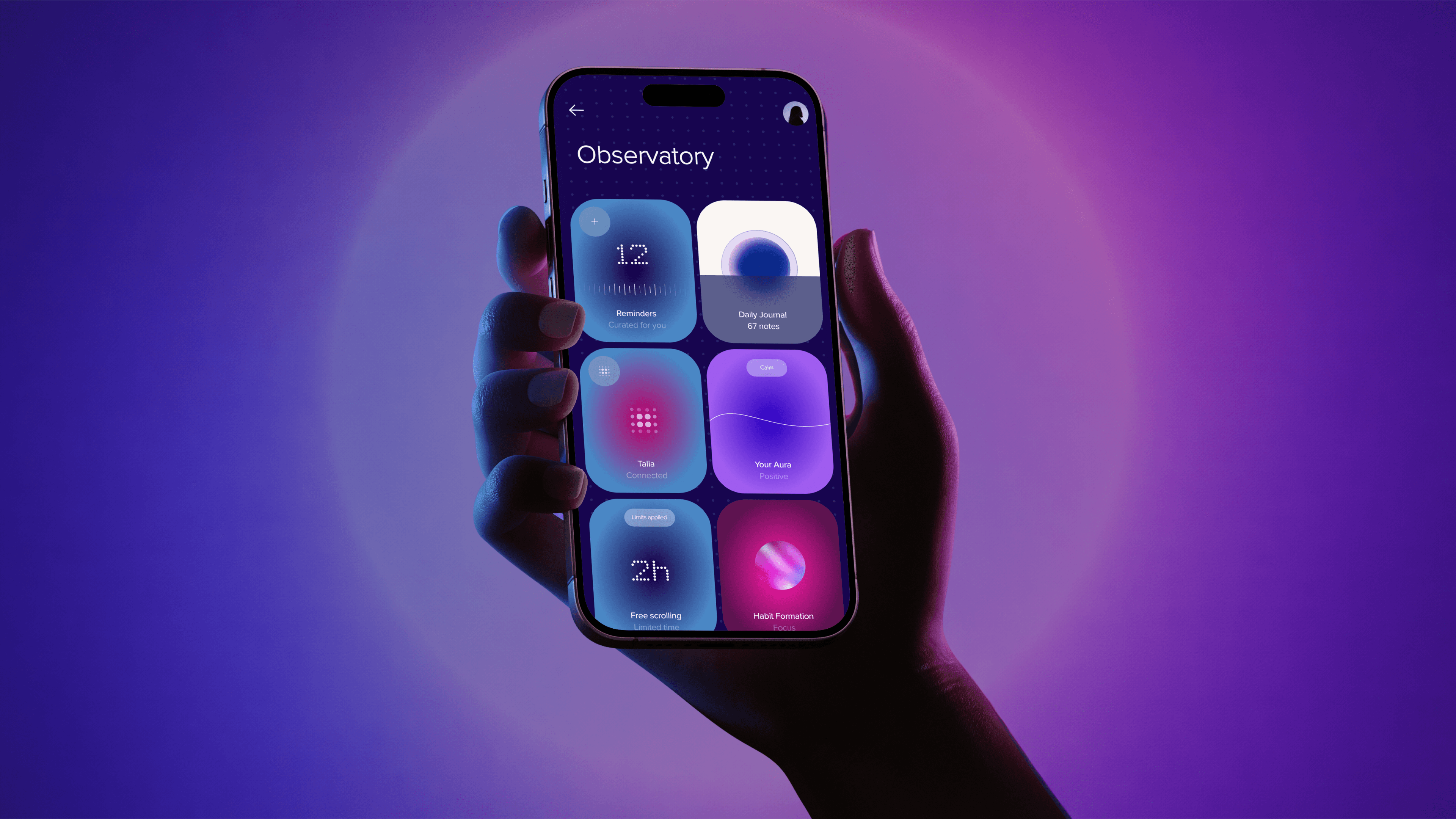
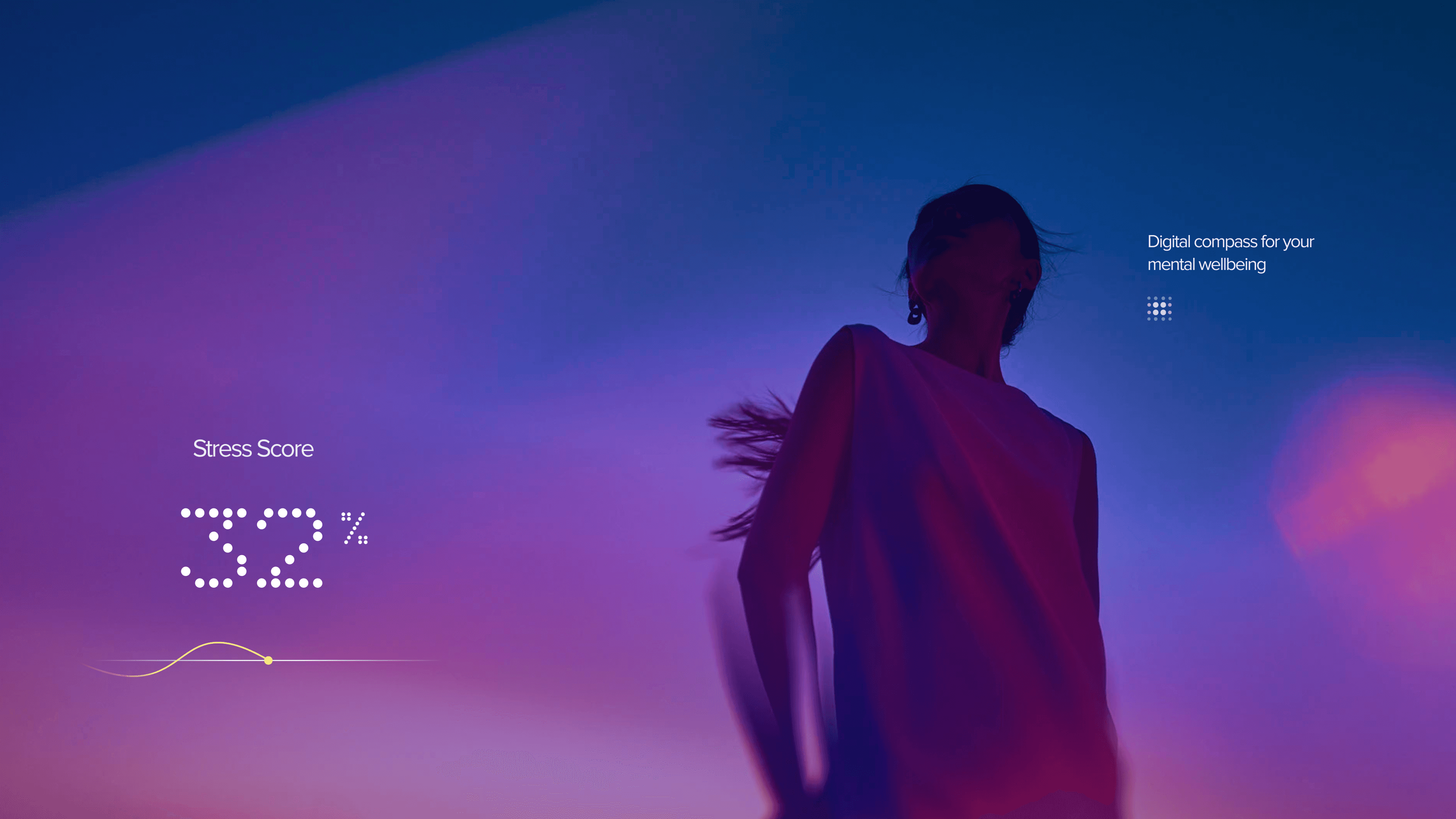
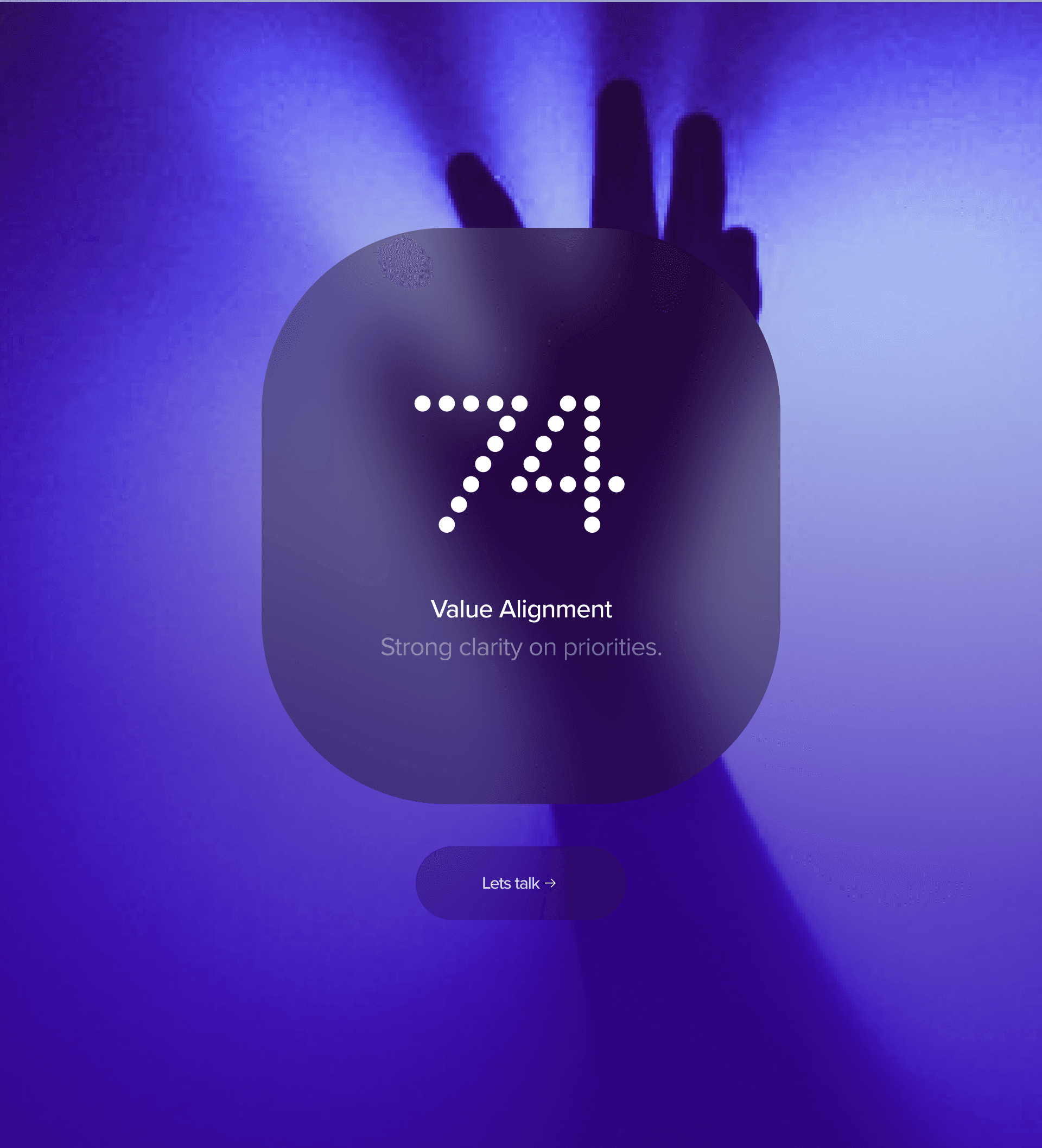
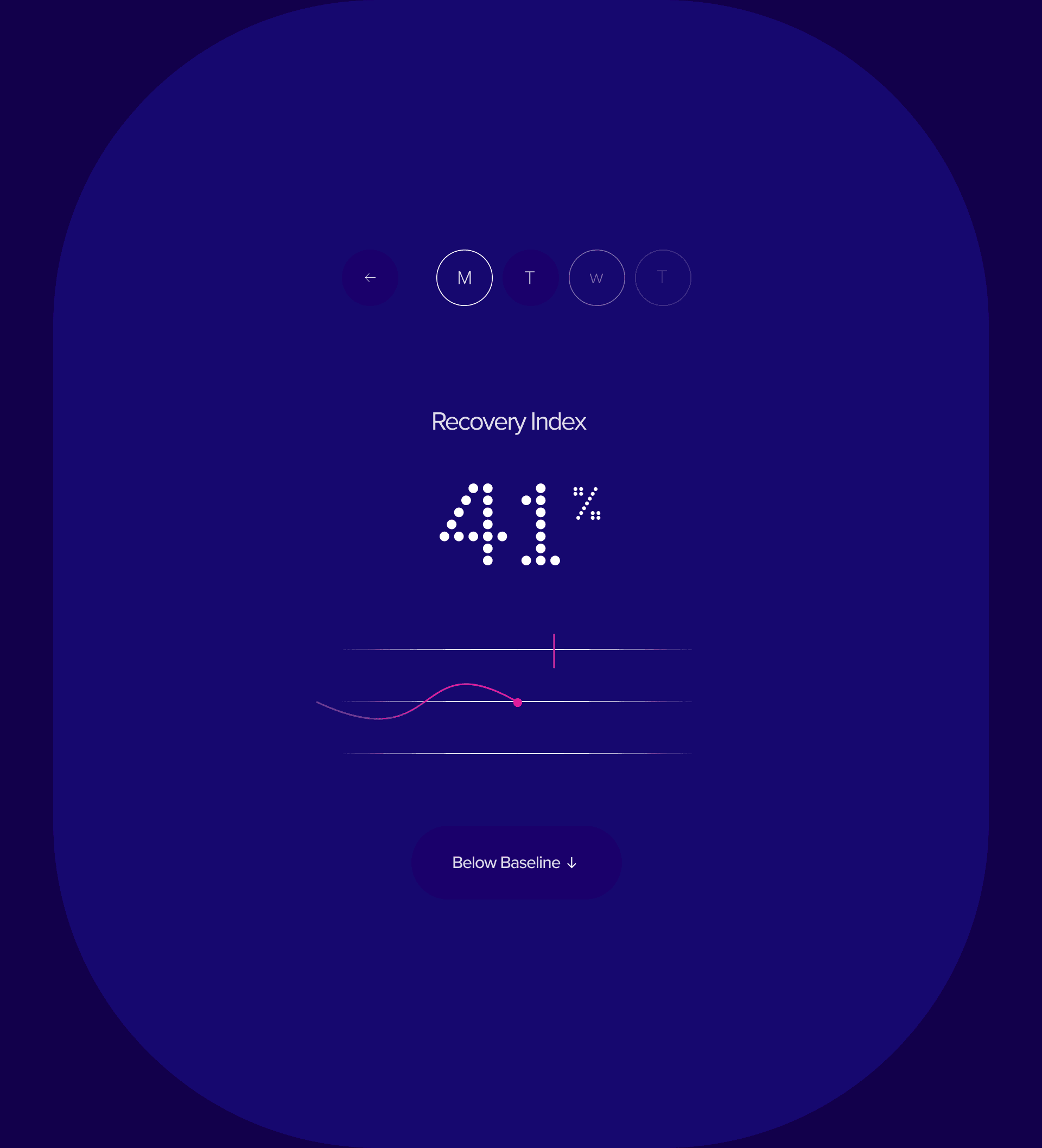
Instead of presenting raw numbers, the system interprets them. Stress, recovery and alignment are expressed through atmospheric gradients, subtle motion shifts and responsive light fields. Data becomes ambient rather than clinical.
Transforming the product from a tracking tool into a continuous emotional layer — something that exists with the user, not above them.
[ DETAILS ]

Designing the Atmosphere
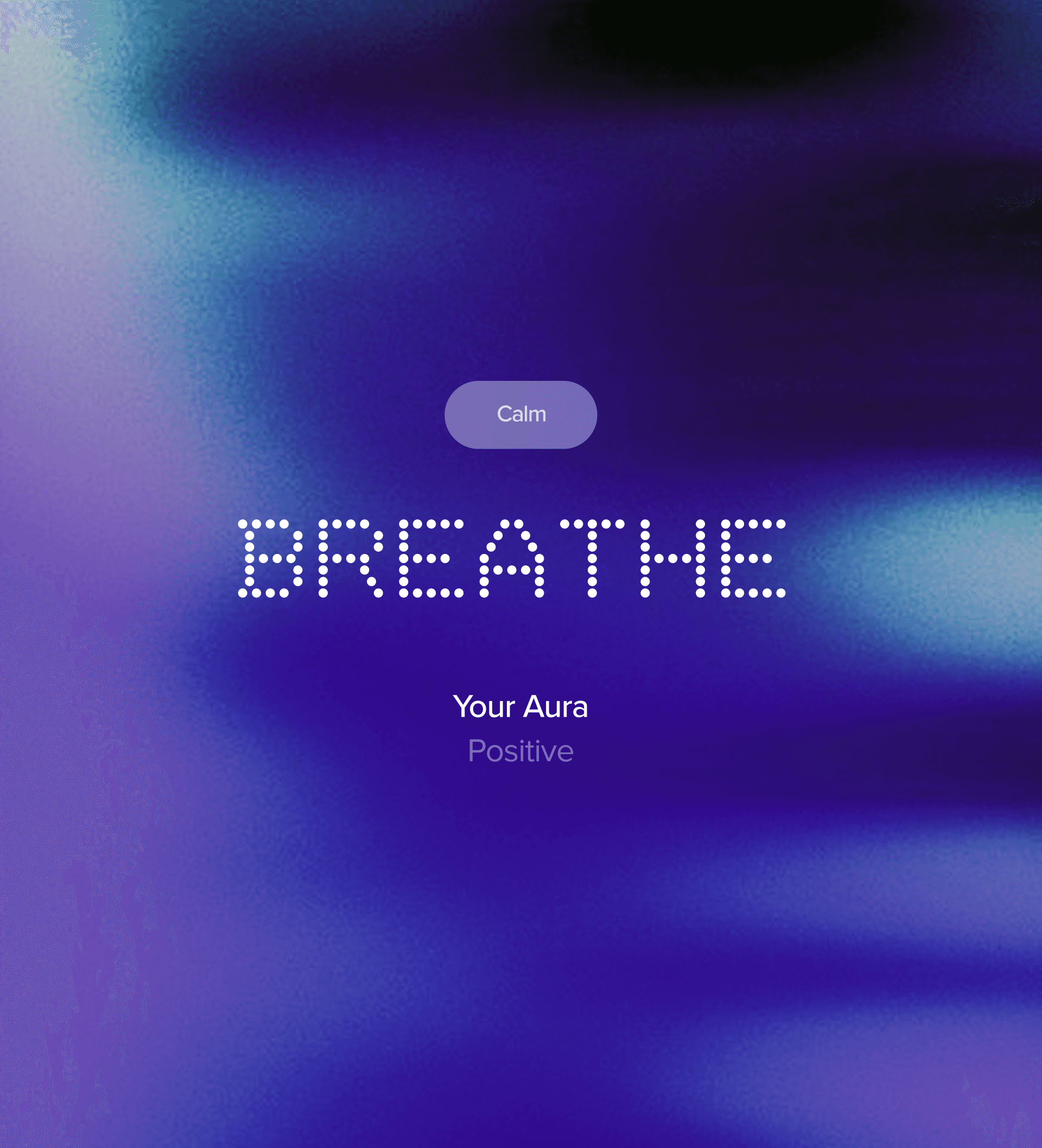
I began by defining the emotional principles guiding the product: calm, responsiveness and intentional minimalism. Talia’s visual language builds on familiar mobile patterns but elevates them through depth and ambient light. Indigo and violet gradients form the emotional base, shifting fluidly depending on context. Soft translucency creates spatial immersion while maintaining clarity.
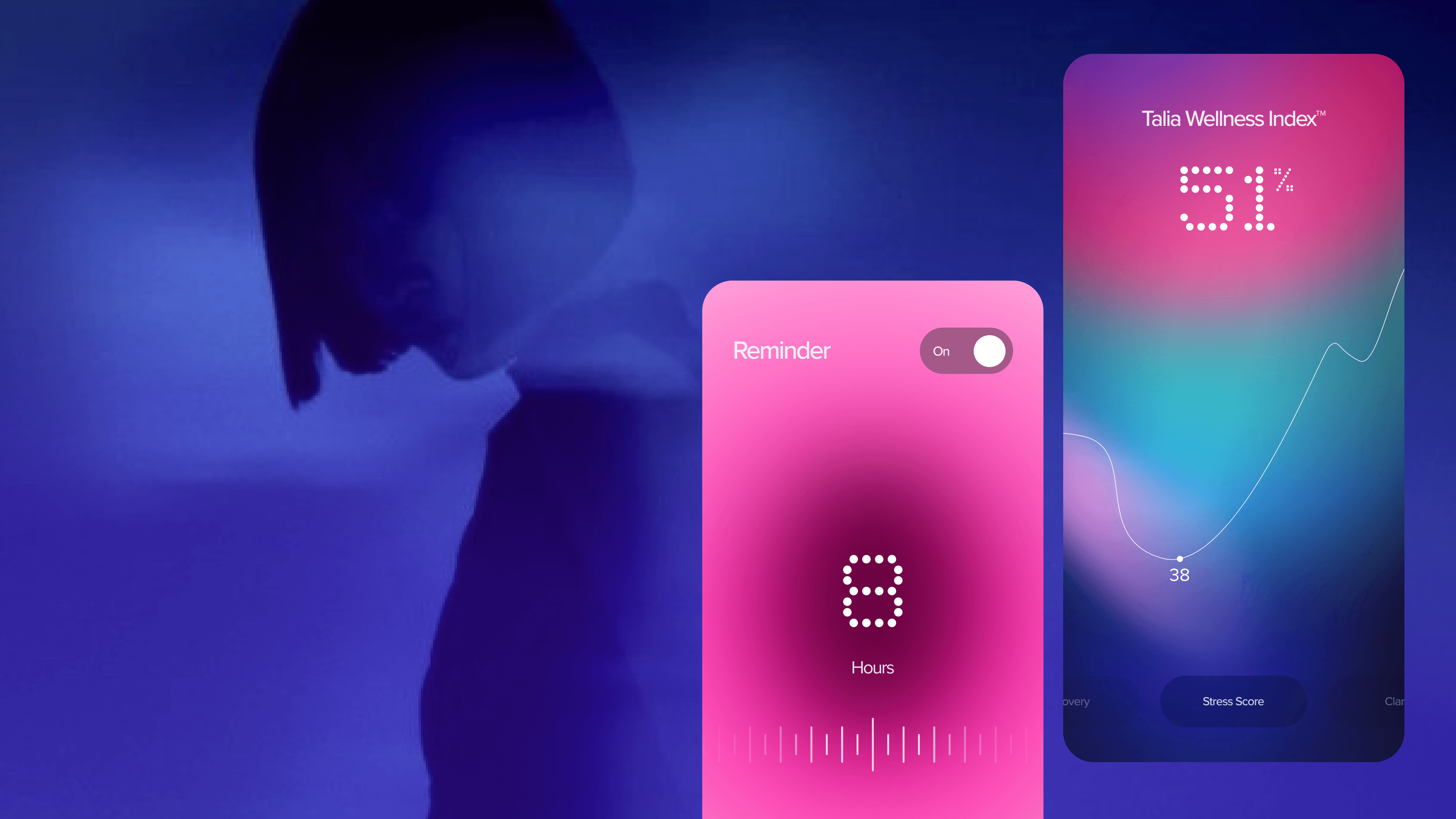
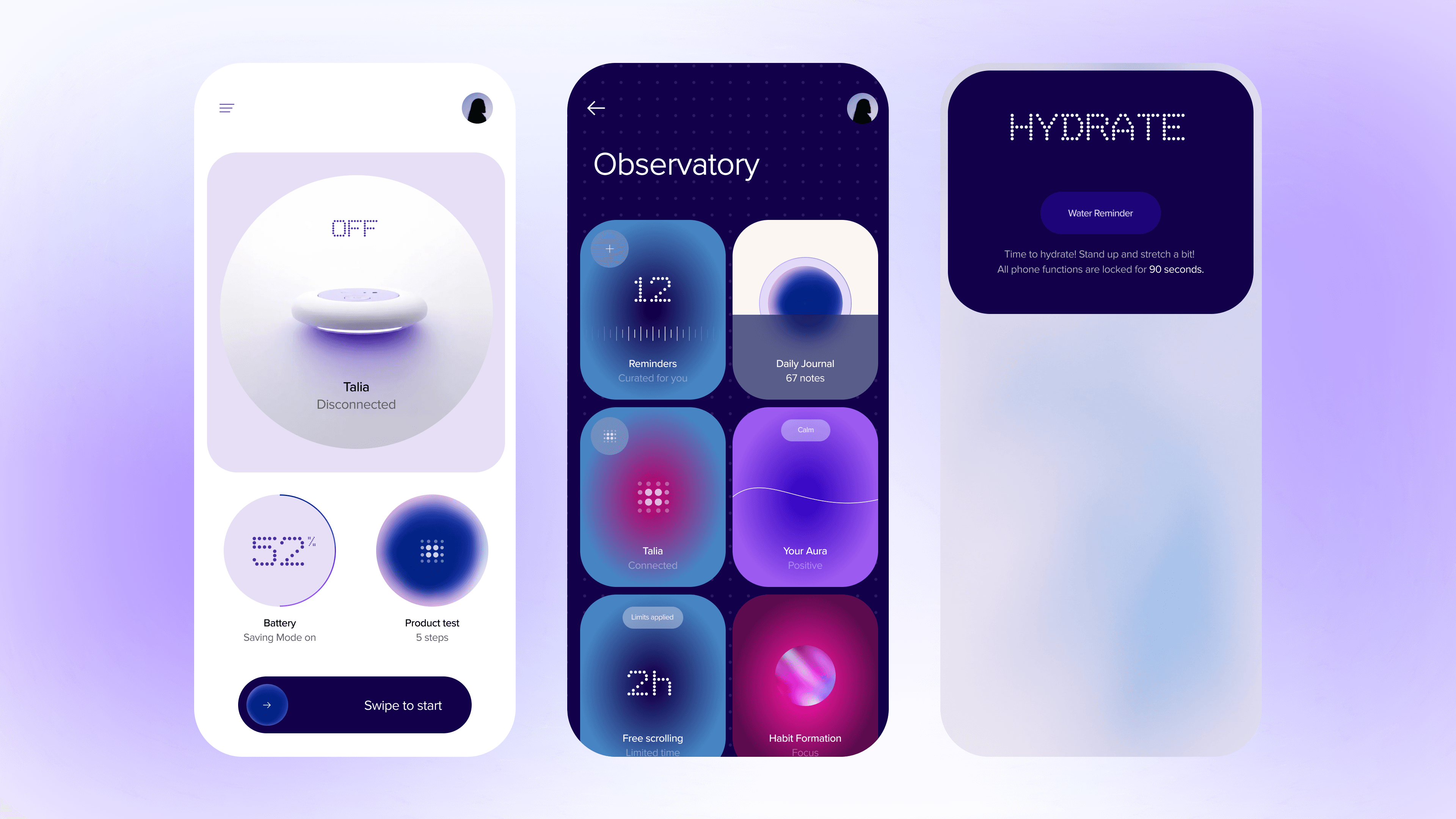
Typography plays a structural role, with dot-matrix numerals introducing tactility to metrics without making them feel clinical. Rounded containers, glow accents and restrained contrast ensure the interface remains gentle and breathable. The result is a system that feels immersive yet grounded — digital, but not cold.
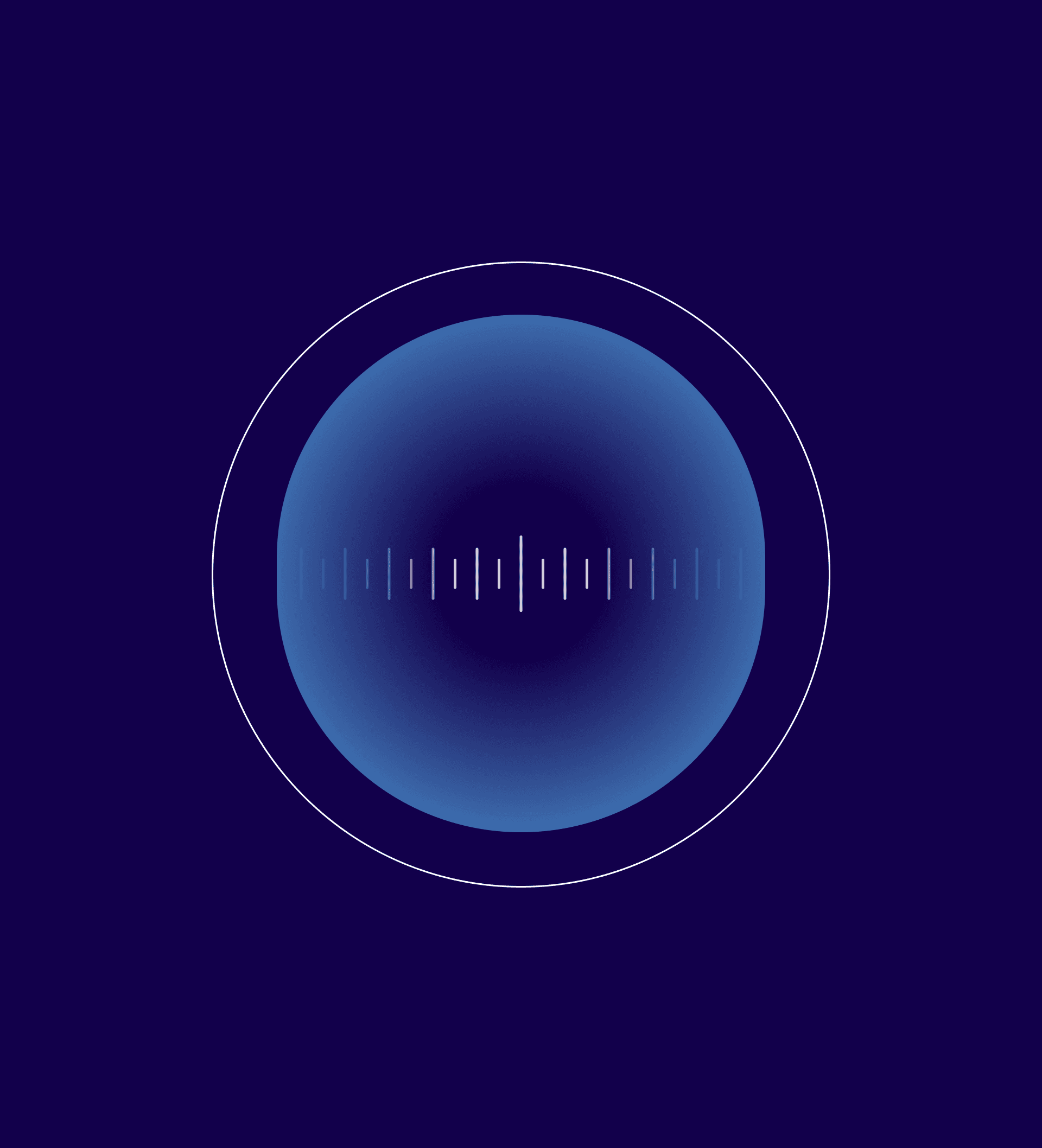
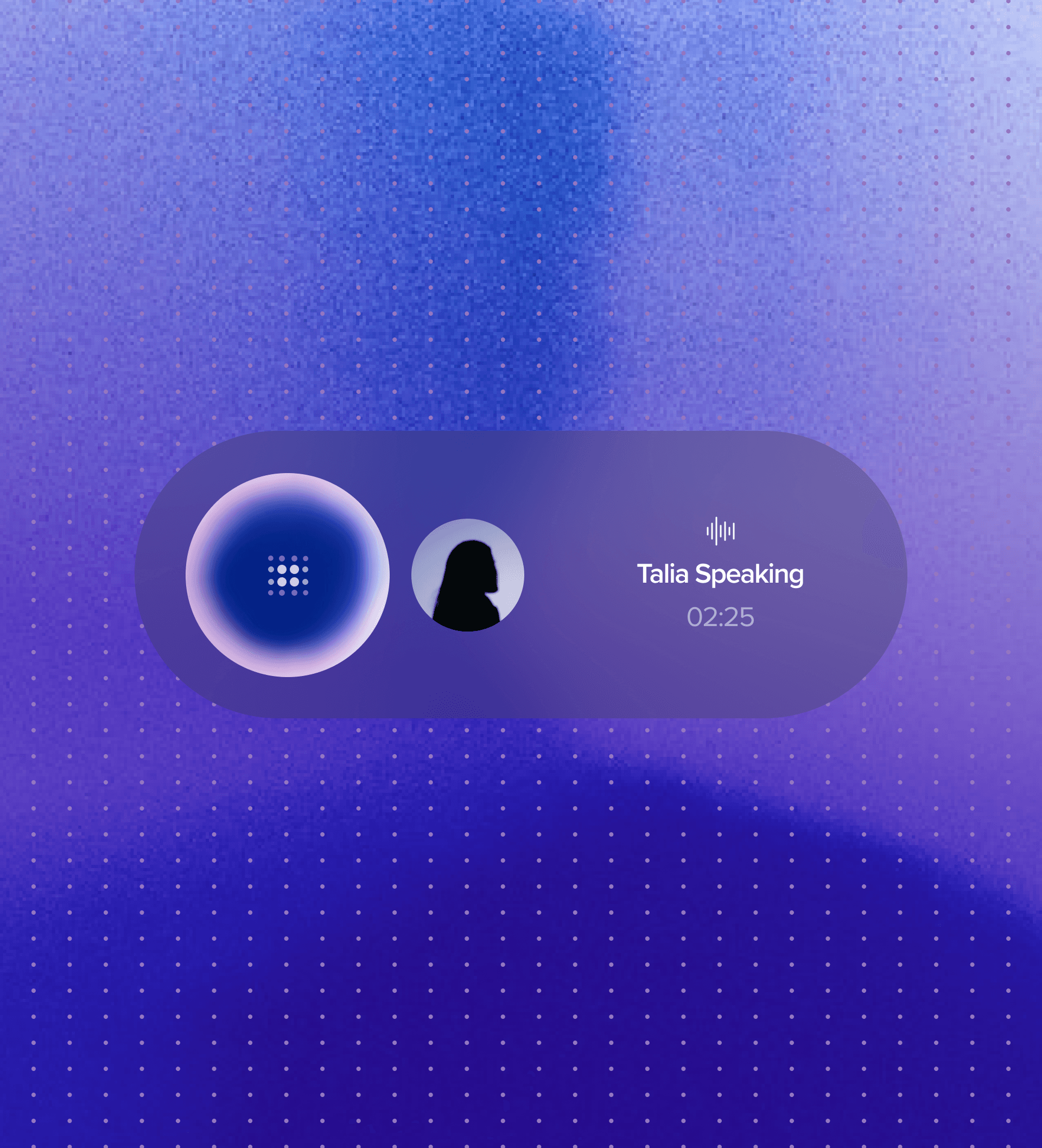
Talia listens first. When activated, the UI recedes to support the conversation rather than compete with it.
Visual feedback mirrors emotional cadence — expanding during openness, softening during reflection. The goal was to create a system where motion communicates empathy and where silence is as important as sound.
[ DETAILS ]

The Emotional Capsule
Voice sessions minimise visual distraction, allowing conversation to lead. The interface reduces to essential cues — waveform diffusion, soft glow indicators and focused interaction points.
Reflection prompts are adaptive and conversational, designed to guide awareness rather than prescribe solutions. The Wellness Index visualises long-term patterns through living gradients and fluid graphs, reinforcing interpretation over judgement.
The Observatory presents wellbeing metrics as modular atmospheric tiles, prioritising clarity without rigidity. Scores are contextual and humanised, supported by subtle motion and gradient shifts that communicate tone beyond numbers.
[ DETAILS ]